_edited.png)
HR Across Industries: Exploring Roles and Impact (Updated 2026)
Updated: May 1
HR professionals have to adopt to each industry, to each company. Exchanging best practices and experiences can help better understand HR across industries. In 2026 HR has to adapt across industries, to the new ones that has been emerging but also to the old companies who need to adapt. Old practices don't help maintain the efficiency and achieve HR goals as it did a decade ago.
Human Resources (HR) plays a crucial role in organizations across various industries, driving talent management, culture development, and organizational effectiveness. From manufacturing to technology, healthcare to education, HR practices may differ, yet they still share common goals. Understanding how HR functions and adapts within these sectors can illuminate the challenges faced and the innovative strategies adopted to overcome them.
The Common Threads in HR Practices
While HR practices vary significantly across industries, some common threads bind them together. The primary objectives of attracting, developing, and retaining talent remain consistent. Moreover, every HR department works to ensure compliance with labor laws, foster a positive workplace culture, and enhance employee engagement.

Industry-Specific Challenges
Each industry faces unique challenges that demand tailored HR strategies. For example:
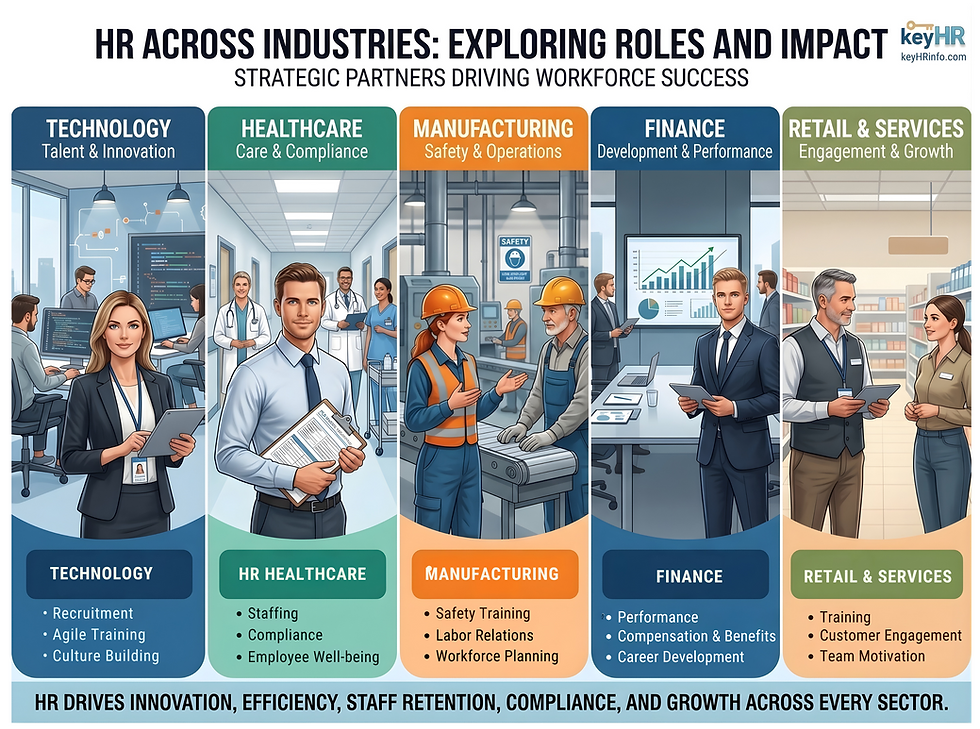
1. Technology: Fueling Talent and Innovation
In the fast-paced tech world, the HR Manager’s primary goal is to maintain a competitive edge through people.
Recruitment | Scouting for specialized skills in a high-demand market. |
|---|---|
Agile Training | Ensuring the workforce can pivot as quickly as the software they build. |
Culture Building | Creating an environment that attracts top-tier developers & keeps them engaged. |
2. Healthcare: Prioritizing Care and Compliance
HR in healthcare is a high-stakes balancing act where employee well-being directly impacts patient outcomes.
Staffing | Managing complex shifts to ensure 24/7 coverage. |
|---|---|
Compliance | Navigating strict medical regulations and certifications. |
Employee Well-being | Supporting frontline workers to prevent burnout and maintain high standards of care. |
3. Manufacturing: Safety and Operational Excellence
In manufacturing, HR Directors focus on the physical environment and the stability of the production line.
Safety Training | Implementing rigorous protocols to ensure every worker returns home safely. |
|---|---|
Labor Relations | Managing the relationship between management and the skilled workforce. |
Workforce Planning | Predicting seasonal demands to keep production lines running efficiently. |
4. Finance: Development and Performance
The financial sector relies on precision and professional growth. HR Specialists here focus on long-term value.
Performance Management | Setting clear KPIs to drive financial results. |
|---|---|
Compensation & Benefits | Designing competitive packages to retain high-value analysts and advisors. |
Career Development | Mapping out clear paths for advancement to build a loyal leadership pipeline. |
5. Retail & Services: Engagement and Growth
In the service industry, the employee is the face of the brand. HR Managers focus on motivation and the customer experience.
Training | Equipping staff with the product knowledge and social skills needed for sales. |
|---|---|
Customer Engagement | Highlighting how staff interactions drive brand loyalty. |
Team Motivation | Keeping morale high in high-traffic, customer-facing environments. |
Best Practices in HR Management Across Different Industries
Regardless of the industry, there are best practices that can enhance HR management and drive success. Some widely adopted strategies include:
Tailored Recruitment Strategies
Employing industry-specific recruitment tools can streamline the hiring process. For instance, tech companies might focus on coding challenges for applicants, while healthcare organizations could leverage simulations for practical assessments.
Employee Development Programs
Continuous learning opportunities are increasingly vital. Investing in employee training not only enhances skill levels but also promotes loyalty. Programs can cover technical skills or personal development, depending on the industry’s needs.
Diversity and Inclusion Initiatives
Fostering an inclusive workplace is important in every industry. Implementing diversity training and promoting equitable hiring practices helps to create a culture that values different perspectives, leading to better decision-making and innovation.
Utilizing Technology
Incorporating HR tech such as applicant tracking systems and performance management software enables departments to operate more efficiently. Such tools help analyze data to make informed decisions regarding talent management across various functions.
The Future of HR Practices
As industries continue to evolve, so will HR practices. The key trends shaping the future of HR across sectors include:
Emphasis on Mental Health
Organizations are beginning to recognize the importance of employee mental health and well-being. HR initiatives focused on health resources and support systems are likely to grow.
Skills-Based Hiring
Moving away from traditional degree requirements, some industries are adopting a skills-based hiring approach, which broadens talent pools and promotes diversity.
Agile HR Practices
Flexibility and adaptability will be critical in the future of HR. Companies that embrace agile methodologies will be better positioned to respond to shifting market demands and workforce needs.
Enhanced Employee Experience
HR will increasingly focus on creating a holistic employee experience, which encompasses everything from onboarding to career pathways, ensuring a seamless and fulfilling journey for all employees.
Understanding HR across industries provides valuable insights into how diverse sectors manage their human capital. By recognizing the unique challenges and embracing best practices, organizations can create a robust HR framework that drives success – regardless of industry.
Frequently Asked Questions (FAQs) HR Across Industries: Exploring Roles and Impact in 2026
What is the role of HR in different industries?
HR plays a pivotal role in recruitment, employee development, compliance with laws, and enhancing organizational culture across all industries. Each sector has its unique challenges and best practices.
How does technology impact HR across industries?
Technology enhances HR functions by streamlining recruitment, improving data analysis, and facilitating employee engagement. Many industries are adopting HR tech tools to operate more efficiently.
What are some HR best practices?
Effective recruitment strategies, continuous employee development programs, diversity initiatives, and technology integration are considered best practices that contribute to successful HR management.
How do industry challenges shape HR practices?
Every industry faces specific challenges that require HR to adapt their strategies. By relying on tailored training, compliance, and innovative retention methods, HR can meet these unique demands effectively.
Why is employee experience important in HR?
A positive employee experience enhances job satisfaction and loyalty, which in turn leads to higher retention rates. HR must focus on creating a supportive work environment to foster employee well-being and productivity.
keyHRinfo.com offers services in areas of payroll implementation, payroll data migration, payroll consolidated reports and analytics to international companies with presence in Hungary.


